One writer, two names…
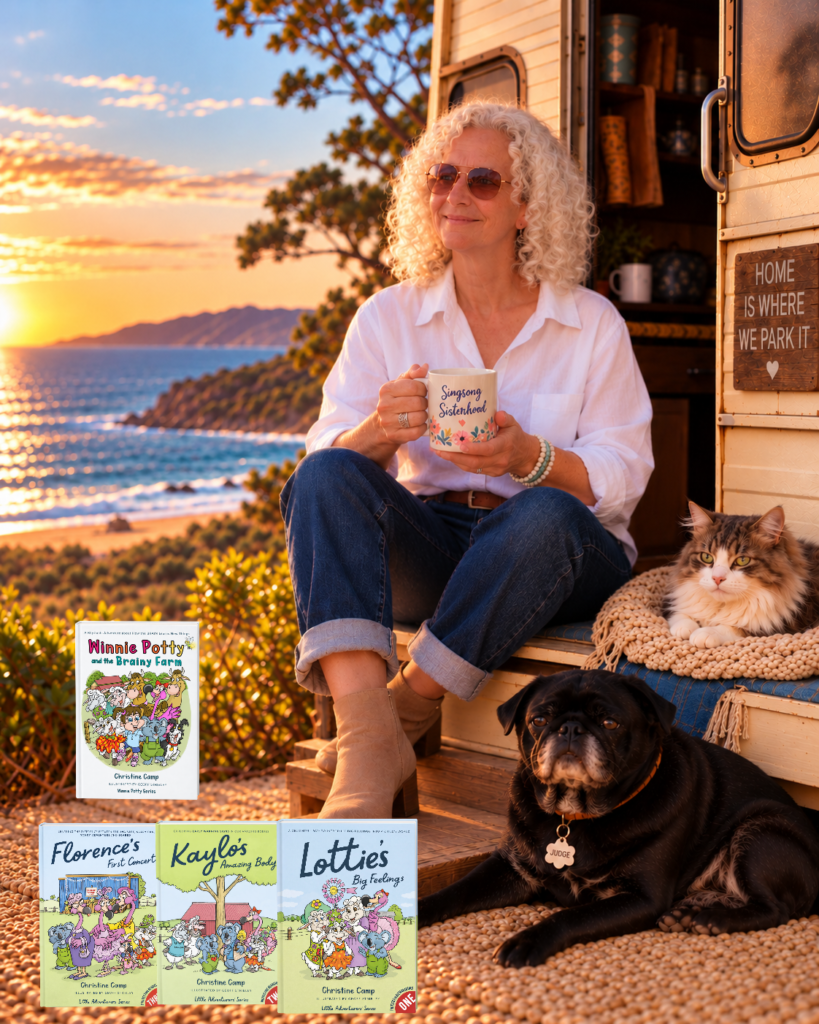
I write as Christine Camp for children, families and educators, and as Chrissy Camp for readers of women’s fiction.
At first glance, Protective Behaviours picture books and a women’s fiction series set in a coastal caravan park might seem worlds apart. But for me, they come from much the same place — a lifelong curiosity about people, the experiences that shape us, and the importance of feeling safe, connected and somewhere we belong.
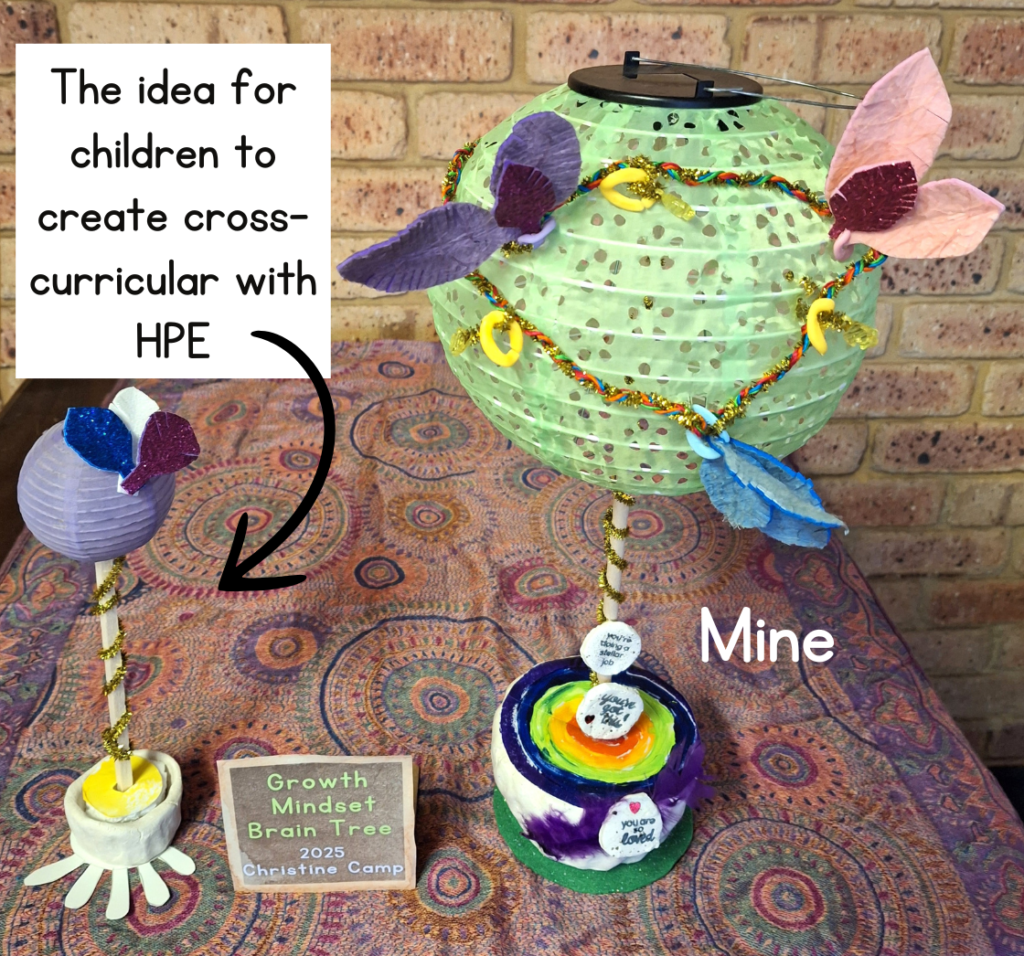
As Christine, I write stories that support children’s safety, social and emotional learning, and their understanding of how their brains learn and grow.
As Chrissy, I write about women navigating life’s unexpected turns — friendship, resilience, second chances and the chosen families we sometimes find along the way.
Different stories. Different readers. But the heart behind them is very much the same.
How did I get here?
Long before I became an author, I spent more than 30 years working in community services with children and families. Much of that work involved supporting people through difficult times, but over the years I became increasingly drawn to prevention — helping children build the knowledge, confidence and language they need to navigate the world more safely.
That path eventually led me to the Protective Behaviours program, and it felt like the answer I had been looking for — a way to focus on prevention before harm occurred. I trained as a facilitator and began working with children, families, educators and schools, helping children understand their feelings, recognise the clues their bodies give them and know they have the right to feel safe.
And somewhere along the way, another part of me kept nudging for attention.
I had always loved stories.
I had completed a Bachelor of Arts in Writing, and while my professional life centred on children, families and Protective Behaviours, my love of writing had never really gone away.
From Protective Behaviours to children’s books
At the time, there weren’t many age-appropriate storybooks that could be used alongside the Protective Behaviours program. Yet I knew how powerful stories could be. A children’s book could introduce an important idea while giving children a safe space to explore it through a character’s experiences.
Feelings are the first topic introduced in Protective Behaviours, so that became my starting point.
And that was where Lottie’s Big Feelings began.
The road from an idea to a published book taught me about writing, illustration, design, independent publishing and, perhaps most importantly, trusting my own creative instincts.
Lottie’s Big Feelings was followed by Kaylo’s Amazing Body and Florence’s First Concert. What began with one little lamb and a story about feelings was becoming something much bigger.
And then came Winnie Potty
Winnie arrived during a children’s writing course with Australian author Tim Harris. One of my characters was a girl called Winnie Potty. Tim laughed every time he said her name and told me she needed her own series.
He was right.
But Winnie’s first story grew from a much bigger question I had been carrying through my work with children:
Can children learn when they’re experiencing big feelings?
That question was one reason I completed a Graduate Certificate in Psychology and continued exploring how children learn through my Master of Teaching (Early Childhood). As I began connecting what I was learning with my Protective Behaviours work, I knew Winnie’s first story needed to explore how the brain learns new things.
And that became Winnie Potty and the Brainy Farm — the beginning of a new series that will continue exploring Protective Behaviours topics through Winnie.
But there was another story waiting…
That story began in 2023, during a particularly difficult period in my life. I had taken an intermission from university, life was personally demanding, and my children’s books weren’t moving forward in the way I had hoped.
One morning, feeling overwhelmed, frustrated and stuck, I sat down and started writing.
There was no publishing plan. In fact, there wasn’t much of a plan at all.
And something clicked.
Suddenly I couldn’t wait to get back to the computer each day. The characters followed me everywhere. I’d be walking down the supermarket aisle when I suddenly understood why Georgette behaved the way she did, or how Sisterhood Street needed to work. I began carrying a notebook so I could capture the ideas before they disappeared.
The world that emerged drew on things I knew and loved — my own time living in a caravan park, years of family camping and travelling, and the freedom of the open road.
I was also noticing more women taking to the road on their own, sharing advice, forming communities and looking out for one another.
Their reasons were as individual as they were — adventure, freedom, unexpected changes and, for some, rebuilding their lives.
Something about that freedom, resilience and sense of women supporting women stayed with me. Slowly, those observations, together with pieces of my own life, found their way into somewhere entirely fictional:
Singsong.
In three months, I had written 60,000 words.
And then I put it in a drawer … and went back to uni.
When the story wouldn’t stay in the drawer
Eventually, Singsong called me back.
I sent the manuscript to an editor and discovered there was something in the story worth pursuing — and quite a lot I still needed to learn.
I studied character arcs, plotting and scene structure, learning the craft of writing a novel while finding my own voice as an author.
Then I opened the drawer again and rewrote the story, holding onto the characters, heart and sense of place that had made me fall in love with Singsong.
That story became Singsong Sisterhood: The Pink Haven.
Why Chrissy
Chrissy is the name people who have known me for a long time still call me.
But it means something more to me than that.
Chrissy is my dreamer name.
She’s the girl who wrote poems and short stories simply because she loved writing. There was no thought of publishing or becoming an author then. Writing was just something that belonged to me.
As I grew older, I became Chris, and Christine became the name I used professionally and, eventually, for my children’s books.
But when I began writing women’s fiction, Chrissy felt like coming home to that earlier part of myself — the one who wrote because she loved stories, imagined other worlds and wondered where they might take her.
So when it came time to choose the name that would sit on Singsong Sisterhood, it couldn’t really have been anything else.